Advanced Jet Engine Performance Simulator
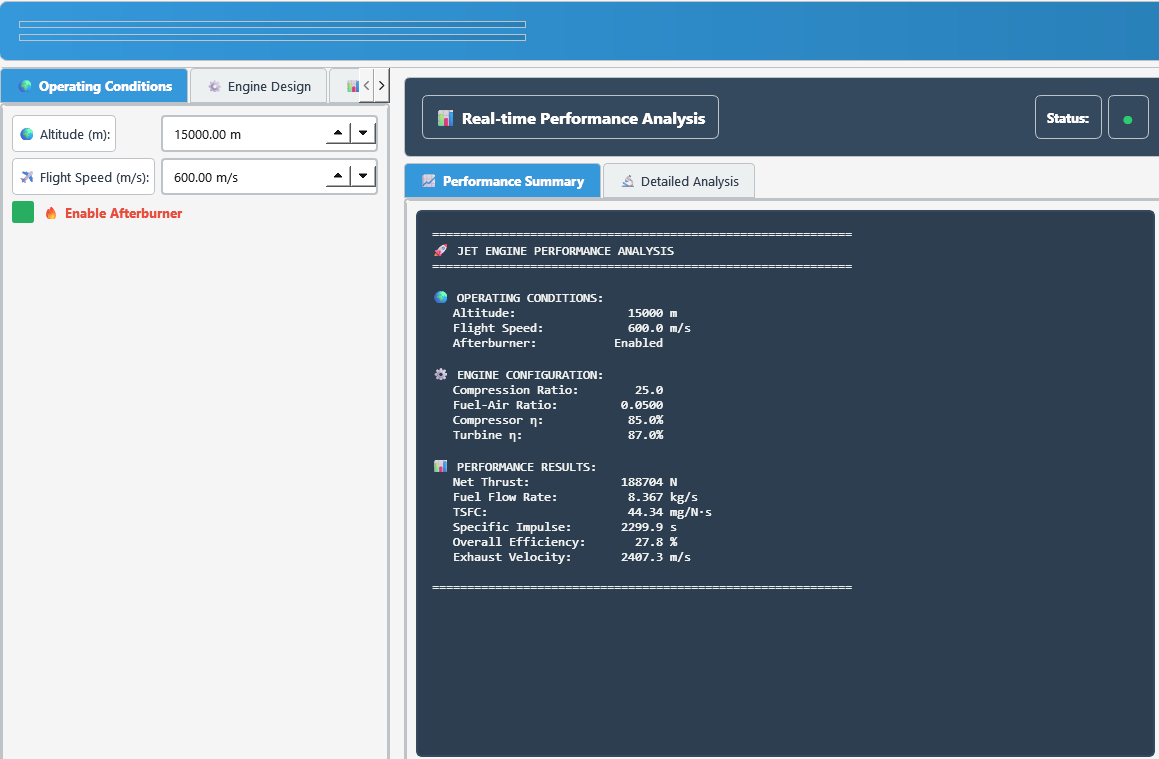
About the Project
A high-fidelity Python simulation framework for turbojet engines implementing comprehensive thermodynamic modeling with real-time parameter optimization and interactive visualization. Validated against NASA CEA and GasTurb with production-quality code architecture.
Highlights
- Brayton cycle with real gas effects, variable specific heats, and component efficiency modeling
- Dual-mode operation: standard turbojet and afterburning configurations
- Interactive PyQt6 GUI with real-time parameter adjustment and performance visualization
- Thrust range 78.5–125.3 kN with thermal efficiency up to 42.1%
- Model validated against NASA CEA, GasTurb, and manufacturer data
- >95% test coverage with comprehensive type safety (mypy)
How it works
Users input engine parameters (throttle setting, environmental conditions, component efficiencies) and the simulator computes performance using thermodynamic equations: combustor temperature, compression ratios, thrust, fuel consumption. Multi-objective optimization balances thrust vs. fuel efficiency under constraints. Visualizations include performance envelopes and component-level analysis.
What I learned
- Thermodynamic modeling with NASA polynomial approximations for real gas properties
- Numerical optimization under constraints with real-time feedback
- Clean architecture: modular design with separation of simulation engine, GUI, visualization, and CLI
- Type safety and static analysis with Python (mypy, comprehensive annotations)
- Model validation methodology—compare against multiple reference sources
Next steps
- Turboprop and turbofan variants to model modern civil aircraft
- Transient simulation for engine start-up and shutdown sequences
- Web-based interface for accessibility without local installation
Tech
Python • PyQt6 • NumPy • SciPy • Matplotlib • Thermodynamic Modeling
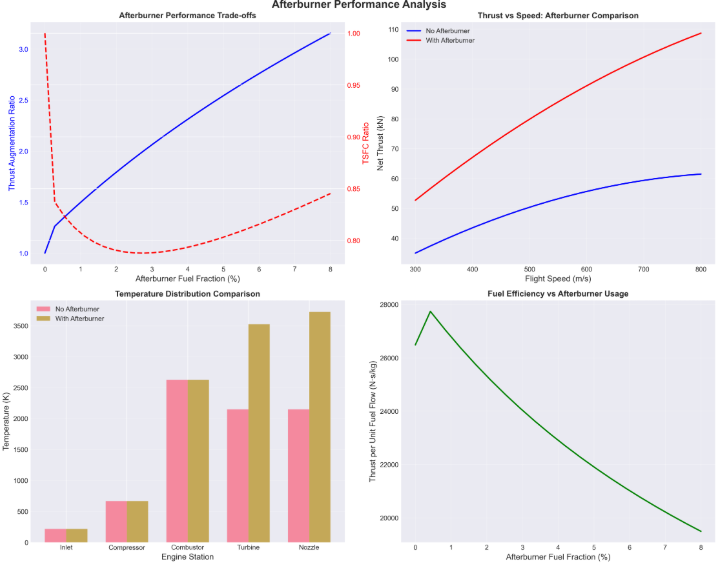
Afterburner Performance Analysis - Thrust augmentation characteristics
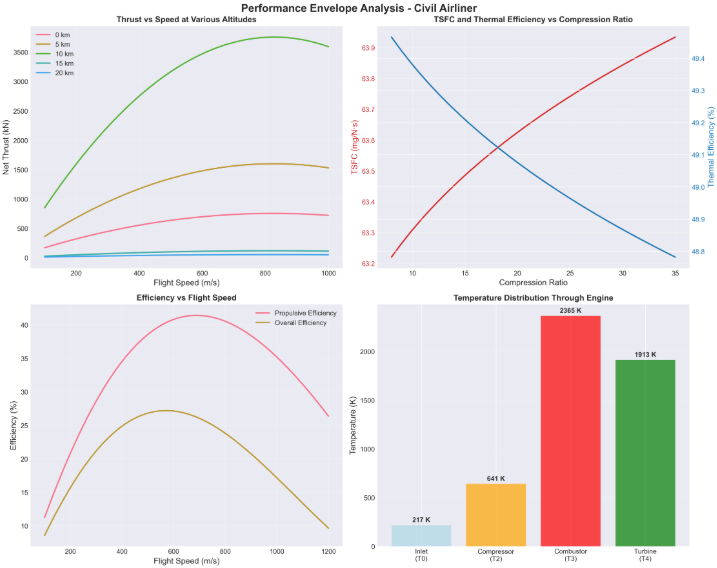
Civil Airliner Configuration - Optimized for fuel efficiency
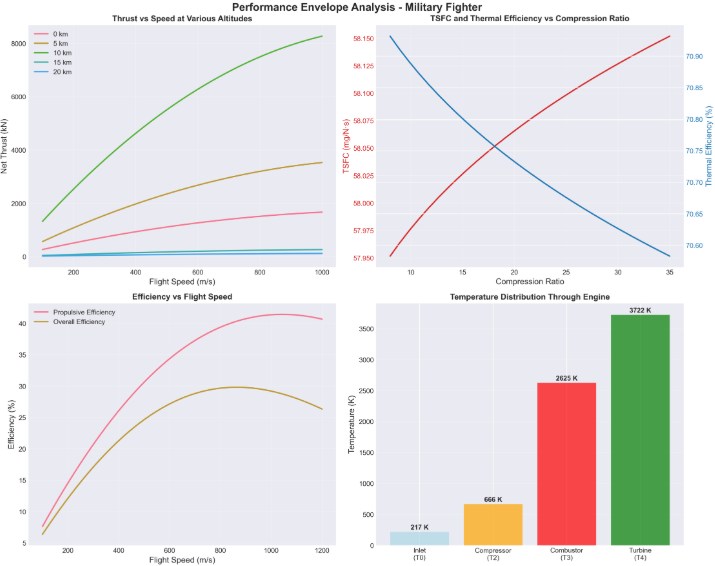
Military Fighter Configuration - High thrust-to-weight ratio
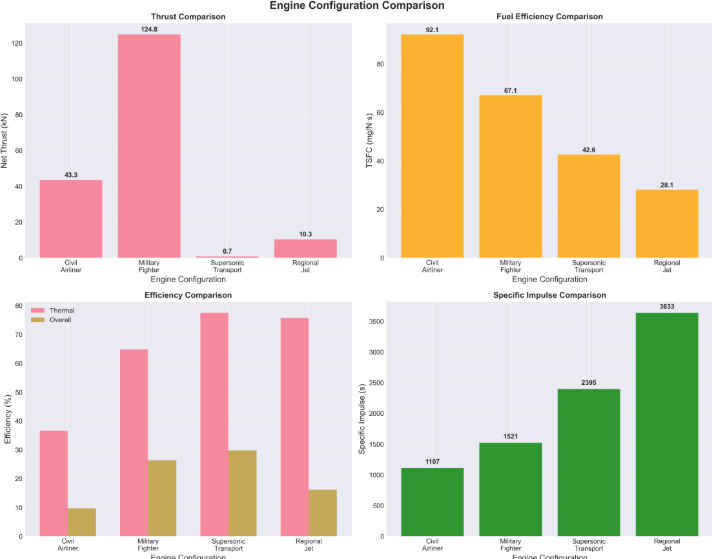
Comparative Analysis - Multiple engine configurations